The Ferrari Paradox: How F1's Most Successful Team Has the Longest Current Drought
As we stand on the precipice of the 2026 Formula 1 season, the air at Fiorano is thick with a familiar, intoxicating blend of optimism and trepidation. On paper, Scuderia Ferrari remains the undisputed titan of the sport. Their museum in Maranello groans under the weight of 16 Constructors' Championships and 15 Drivers' titles. They are the only team to have competed in every season since the world championship's inception in 1950. Yet, as the covers came off the strikingly crimson SF-26 this January, a chilling statistic loomed over the proceedings like a winter fog: it has been 19 years since a Ferrari driver stood on the step that matters most.
The Ferrari Paradox is now the defining narrative of the modern era. How can the most successful, best-funded, and most storied team in racing history find themselves mired in the longest championship drought of the top-tier outfits? While Mclaren celebrates a dominant resurgence with back-to-back titles in 2024 and 2025, and Red Bull reflects on a half-decade of Verstappen supremacy, Ferrari enters 2026 looking back at nearly two decades of "what ifs."
The Weight of History: A 19-Year Void
To understand the Ferrari F1 Championship drought, one must first remember what the world looked like the last time they won. When Kimi Räikkönen snatched the title by a single point in Interlagos, the iPhone had only been on sale for four months. Since then, we have seen the rise and fall of the Red Bull empire, the decade-long Mercedes hegemony, and now the Woking-based renaissance of Mclaren.
The numbers are staggering. As of today, the Ferrari last Drivers Championship was secured in 2007. The Constructors' trophy hasn't called Maranello home since 2008. For a team that once made winning look like a bureaucratic inevitability during the Schumacher years, this nineteen-year winter is more than a slump; it is an identity crisis.
The Statistical Shadow
| Category | Last Victory | Years Elapsed |
|---|---|---|
| World Drivers' Championship | Kimi Räikkönen (2007) | 19 Years |
| Constructors' Championship | Scuderia Ferrari (2008) | 18 Years |
| Total Titles in History | 31 (15 Drivers, 16 Teams) | #1 All-Time |
Why Hasn't Ferrari Won Recently? The 2025 Nightmare
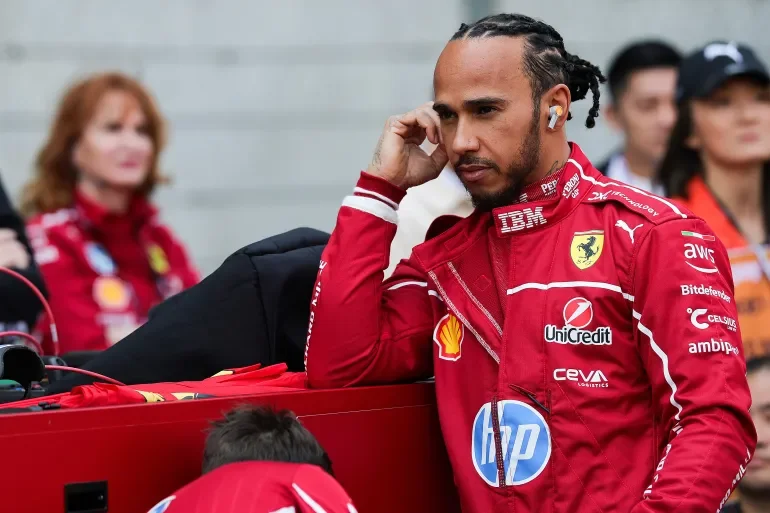
If 2024 provided a glimmer of hope; with the team finishing a narrow second to Mclaren in the standings; 2025 was the cold shower that woke the Tifosi from their dreams. The arrival of Lewis Hamilton was supposed to be the final piece of the puzzle. The seven-time champion, sporting the iconic red overalls, was the "chosen one" to break the curse.
Instead, the 2025 season became a case study in why hasn't Ferrari won recently. The SF-25 was a capricious beast, fast in flashes but fundamentally flawed in its suspension geometry. For the first time in his illustrious career, Hamilton finished a full season without a single Grand Prix podium. His sixth-place finish in the standings, four spots behind teammate Charles Leclerc, told a story of a legend struggling to adapt to a "nightmare" car that simply wouldn't rotate.
"I've been living a nightmare for a while," Hamilton admitted after a disastrous retirement in São Paulo last November. "The flip between the dream of driving for this amazing team and the reality of our results has been hard to stomach."
The 2025 campaign was plagued by the same issues that have haunted Ferrari for two decades:
-
Technical Missteps: A radical suspension change backfired, leaving the car sensitive to track temperatures.
-
Operational Frailty: Double disqualifications in China due to plank wear and strategic blunders in Silverstone cost the team vital momentum.
-
The "Pressure Cooker" Effect: As the winless streak grew, the internal atmosphere at Maranello reportedly became fractured, leading to the mid-winter replacement of Hamilton's race engineer, Riccardo Adami, for the upcoming 2026 season.
The Ghosts of "Close But No Cigar"
To truly diagnose the Ferrari F1 Championship drought, we have to look at the "near-miss" eras that preceded the current slump. Ferrari hasn't always been slow; they have often been just "not quite enough."
The Fernando Alonso Years (2010-2014)
Alonso's tenure was perhaps the most painful for the Tifosi. In 2010 and 2012, the Spaniard dragged cars that had no right to be in title contention to the final race of the season. The image of Alonso staring into space after the 2012 Brazilian Grand Prix remains an indelible mark of the drought. In both instances, Ferrari was beaten not just by the pace of Red Bull, but by their own inability to react to shifting race dynamics.
The Sebastian Vettel Era (2015-2020)
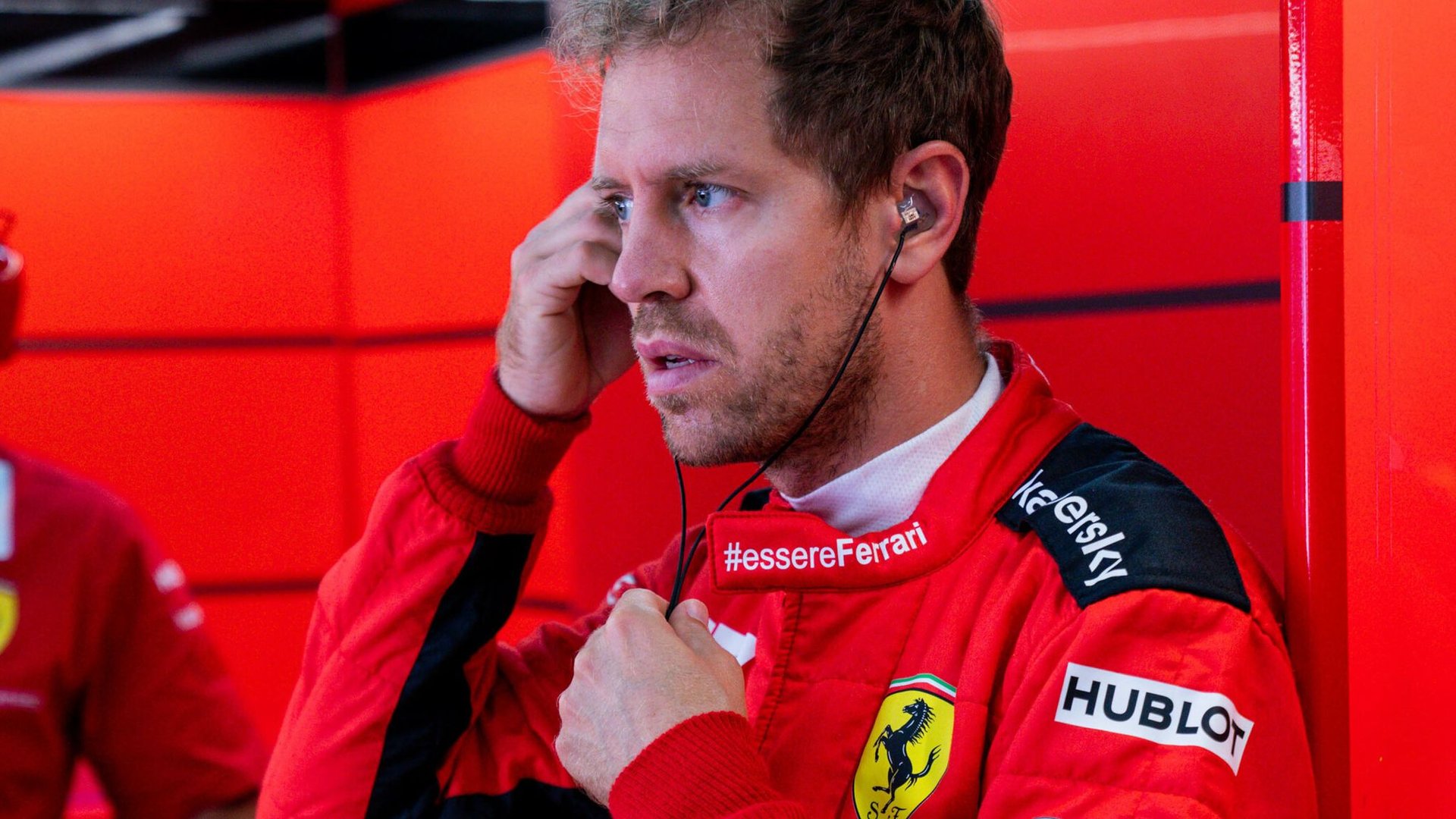
When Vettel joined, the "Schumacher 2.0" narrative was irresistible. By 2017 and 2018, Ferrari finally had a car---the SF70H and SF71H---that was arguably the class of the field. However, the 2018 season crumbled following Vettel's infamous crash while leading in the rain at Hockenheim. That moment seemed to break the team's confidence. Mercedes, led by a relentless Hamilton, sensed blood and never looked back.
The Leclerc and Binotto Experiment (2022)
Under the new ground-effect regulations in 2022, Ferrari started with the fastest car on the grid. Charles Leclerc won two of the first three races. The drought looked set to end. Then came the reliability failures in Spain and Baku, followed by the strategic catastrophe at Monaco and Silverstone. By mid-season, the title charge had evaporated, eventually leading to Mattia Binotto's resignation.
The Institutional Paradox: Why Maranello Struggles
Critics often point to the "Italian-ness" of Ferrari as both its greatest strength and its primary weakness. Unlike Mercedes or Red Bull, which operate with a cold, Anglo-German efficiency, Ferrari is a national institution. Every win is a national holiday; every loss is a parliamentary inquiry.
The Revolving Door of Leadership
Since Jean Todt left at the end of 2007, Ferrari has cycled through five Team Principals: Stefano Domenicali, Marco Mattiacci, Maurizio Arrivabene, Mattia Binotto, and now Frédéric Vasseur. Each leader brought a different philosophy, but none have been able to provide the decade-long stability required to build a dynasty. Vasseur has brought a much-needed "no-nonsense" approach, but even he has felt the weight of the Ferrari F1 championship drought.
The Technical Brain Drain
While Mclaren has successfully headhunted top talent from across the grid (including the recent acquisition of Rob Marshall from Red Bull), Ferrari has often struggled to convince top British-based engineers to relocate to Italy. The "Maranello Tax"; the cultural and geographical shift; remains a barrier to entry for the sport's brightest minds.
2026: The Great Reset or the Final Straw?
The 2026 season represents the most significant technical shift in Formula 1 history. With the move to 50/50 electrical-to-internal-combustion power units and the introduction of active aerodynamics, the slate has been wiped clean. For Ferrari, this is not just another season; it is a mandate.
The SF-26: A Radical Departure
The recently unveiled SF-26 suggests that Ferrari has finally stopped trying to fix the mistakes of the past and started fresh.
-
Aero Revolution: The car features a "nimble" concept, being 30kg lighter and 100mm narrower than its predecessor.
-
Power Unit Focus: Ferrari has historically excelled during engine regulation changes. The removal of the MGU-H and the tripling of MGU-K power plays into the hands of the Maranello engine department, which has allegedly been running its 2026 prototype on the dyno since mid-2024.
-
The Hamilton-Leclerc Dynamic: Despite a bruising 2025, the team enters 2026 with arguably the most talented driver pairing on the grid. If the SF-26 is a winner, the internal battle between the hungry veteran and the "Prince of Maranello" will be the story of the year.
The Challenges Ahead
However, the competition is fiercer than ever. Mclaren enters the season as the benchmark for chassis integration. Mercedes has looked revitalised in pre-season simulations, and Red Bull, despite internal management shifts, remains a formidable force with Max Verstappen. Even Aston Martin, now a fully-fledged works partner with Honda, poses a threat to the established order.
Conclusion: Too Big to Fail?
Ferrari's history is a cycle of dominance followed by fallow periods. Before the Schumacher era, they went 21 years without a Drivers' title (1979-2000). We are currently at year 19 of the modern drought. History suggests that the Prancing Horse will eventually gallop again, but in the fast-paced world of F1, history doesn't buy you lap time.
The "Ferrari Paradox" is a reminder that prestige is no substitute for precision. As the lights go out in Melbourne this March, the question won't be whether Ferrari is the most successful team in history, we know they are. The question is whether they can finally become the most successful team in the present.
The Tifosi have waited nineteen years for a champion. For the sake of the sport's most iconic brand, the SF-26 needs to be more than just a beautiful car; it needs to be a redemption song.